(08)
published:8/1/2026
tags:
song requests, DJ song requests, accepting song requests, DJ tips, crowd engagement, live DJ events, DJ PlayNow
target:dj
reading time: 8mins
features:
requests, upvotes, events
(08)
published:8/1/2026
tags:
song requests, DJ song requests, accepting song requests, DJ tips, crowd engagement, live DJ events, DJ PlayNow
target:dj
reading time: 8mins
features:
requests, upvotes, events
/ Article
Not every request deserves an immediate “yes.”
You’re in the middle of a set. The dancefloor is moving, the energy is building, and then a request comes in for a song that would completely change the direction you’re taking.
Do you play it?
Maybe.
What if three people are requesting the same song? What if the request is good, but the timing isn’t? What if the crowd is clearly responding to something else?
Being a DJ means making these decisions constantly.
The goal isn’t to play every song your audience asks for. It’s to understand what they’re asking for, recognize what fits the moment, and make the call without losing control of your set.
DJ PlayNow helps organize that interaction so you can spend less time managing requests and more time making the right musical decisions.
One of the easiest mistakes to make with audience requests is treating every request as something you have to play.
You don’t.
Your audience knows what they want to hear. You know how to make it work within the set.
Those aren’t always the same thing.
Someone might request a song because they love it, but that doesn’t necessarily mean it’s right for the room at that moment.
Maybe the BPM is completely different.
Maybe you’ve just spent the last 20 minutes building toward a particular sound.
Maybe the crowd is responding strongly to the current direction.
Or maybe the request is exactly what the room needs next.
That’s your call.
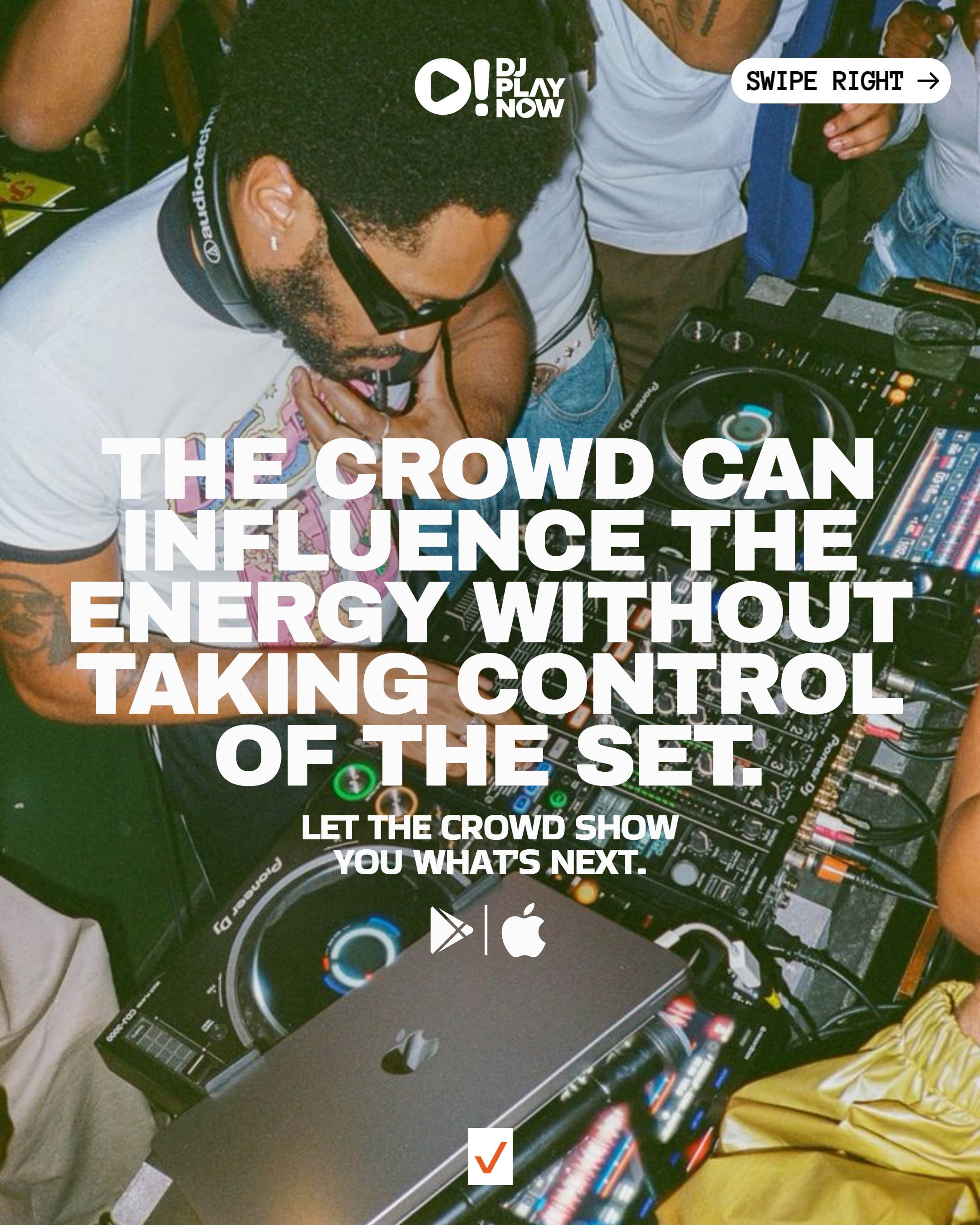
The audience can influence the set. The DJ still controls the set.
There isn’t one rule that works for every event.
Instead, consider a few things before accepting a song request.
Start with the room.
Is everyone dancing? Are people singing along? Is the energy building or beginning to settle?
A song can be great on its own and still be the wrong song for the moment.
Think about what your audience is feeling right now, not simply what one person has asked for.
A good request doesn’t have to be played immediately.
You might like the song, but the transition could be awkward.
That’s fine.
Keep it in mind and find the right place for it.
A request that gets played five songs later can still be a great request.
The important thing is that you’re making the decision intentionally rather than allowing the queue to dictate your set.
This is where audience feedback becomes particularly useful.
If a song is receiving several requests or accumulating upvotes, that’s a stronger signal than a single person asking for it.
It doesn’t automatically mean you should play it.
But it gives you more information about what your audience is interested in.
A request tells you what someone wants. An upvote can tell you that others want it too.
Sometimes the question isn’t whether a song belongs in your set.
It’s whether you can make the song belong in your set.
You might need to wait for the right transition.
You might blend it into another track.
You might use a remix instead of the original.
You might save it for later when the energy changes.
That’s where your experience as a DJ matters.
DJ PlayNow can organize the information coming from your audience, but it doesn’t replace your musical judgment.
This is worth saying clearly.
You can decline a request.
You can leave it pending.
You can decide to play it later.
And you can choose not to play it at all.
That’s not failing your audience.
Your job is to create the best experience for the room, not to fulfill every individual request.
If someone requests a slow song during the peak of a high-energy set, playing it immediately might satisfy that one person while taking the entire room out of the moment.
Sometimes saying “not yet” is the better DJ decision.
When requests start coming in quickly, it can become difficult to remember everything people have asked for.
That’s where an organized request queue becomes useful.
Instead of people repeatedly approaching you at the booth, DJ PlayNow collects their requests digitally so you can review them when you’re ready.
You can see what’s coming in, consider the options, and make decisions without stepping away from your performance.
The queue is there to help you organize the crowd’s input.
It isn’t there to decide your set for you.
A busy event can create a good problem: more requests than you can possibly play.
That’s when prioritization matters.
Start by looking for patterns.
Are several people requesting similar songs?
Are certain requests receiving more upvotes?
Is there a particular genre or artist the crowd seems to be responding to?
Then consider those signals alongside what you’re already hearing from the room.
You don’t need to satisfy every request.
You need to understand the audience well enough to make better choices.
There’s another benefit to managing requests digitally.
Without a system, requests can mean people walking toward the DJ booth, waiting for an opportunity to speak to you, or repeatedly trying to get your attention.
Every interruption takes a little focus away from your performance.
And when several people are doing it at once, those interruptions add up.
With DJ PlayNow, attendees can send their requests through the event instead.
That means you can keep performing while requests continue coming in.
Your audience gets a way to communicate with you.
You get to decide when to respond.
That’s a much better balance.
A song with a lot of upvotes is worth paying attention to.
But popularity isn’t an automatic command.
Think of upvotes as crowd feedback.
If twenty people are supporting one request, you’ve learned something useful about the room.
You can then ask:
The more information you have, the better your decision can be.
But the decision is still yours.
There’s a difference between taking requests and reading requests.
Taking requests means collecting songs people want.
Reading requests means understanding what those requests are telling you about the crowd.
If several people are asking for similar music, that may tell you something.
If a particular request suddenly receives a wave of upvotes, that tells you something else.
If requests slow down while the dancefloor becomes more active, that tells you something too.
These are signals.
Your job is to connect those signals with what you’re seeing and hearing in the room.
That’s how audience engagement becomes useful without taking control away from the DJ.
When a request comes in, you don’t need to overthink it.
Run it through four quick questions:
1. Does it fit the room?
Is the audience likely to respond well right now?
2. Does it fit the set?
Can it work with what you’re currently playing?
3. Is there audience support?
Are other people requesting or upvoting it?
4. Is the timing right?
Should you play it now, save it for later, or leave it out?
If the answer is yes across the board, you may have your next track.
If not, keep control of the decision.
This is ultimately what DJ PlayNow is designed to help with.
Your audience gets a simple way to participate.
You get a clearer view of what they’re asking for.
Requests can be organized in the Live Queue.
Upvotes can show you which requests are getting additional support.
And you remain responsible for deciding what happens next.
That means you don’t have to choose between audience engagement and creative control.
You can have both.
The best request isn’t necessarily the one with the most votes.
It’s the one that makes sense for the moment.
Sometimes that means playing the crowd favorite.
Sometimes it means saving it for later.
Sometimes it means declining it and continuing with your plan.
All three can be the right decision.
What matters is that you’re making the decision with a better understanding of your audience and fewer distractions around you.
That’s the real value of DJ PlayNow’s request experience.
You stay in control.
Your audience gets heard.
And the music keeps moving.
The next time you host an event, don’t feel pressured to play every request that comes through.
Instead, use requests as another way to read the room.
Create your event.
Invite your audience.
Let them make requests.
Watch what gets upvoted.
Then use your experience to decide what belongs in the set.
Let the crowd have a voice. Keep the final say.